Overpass CS map: A History of Innovation and Challenges

Overpass CS map: A History of Innovation and Challenges
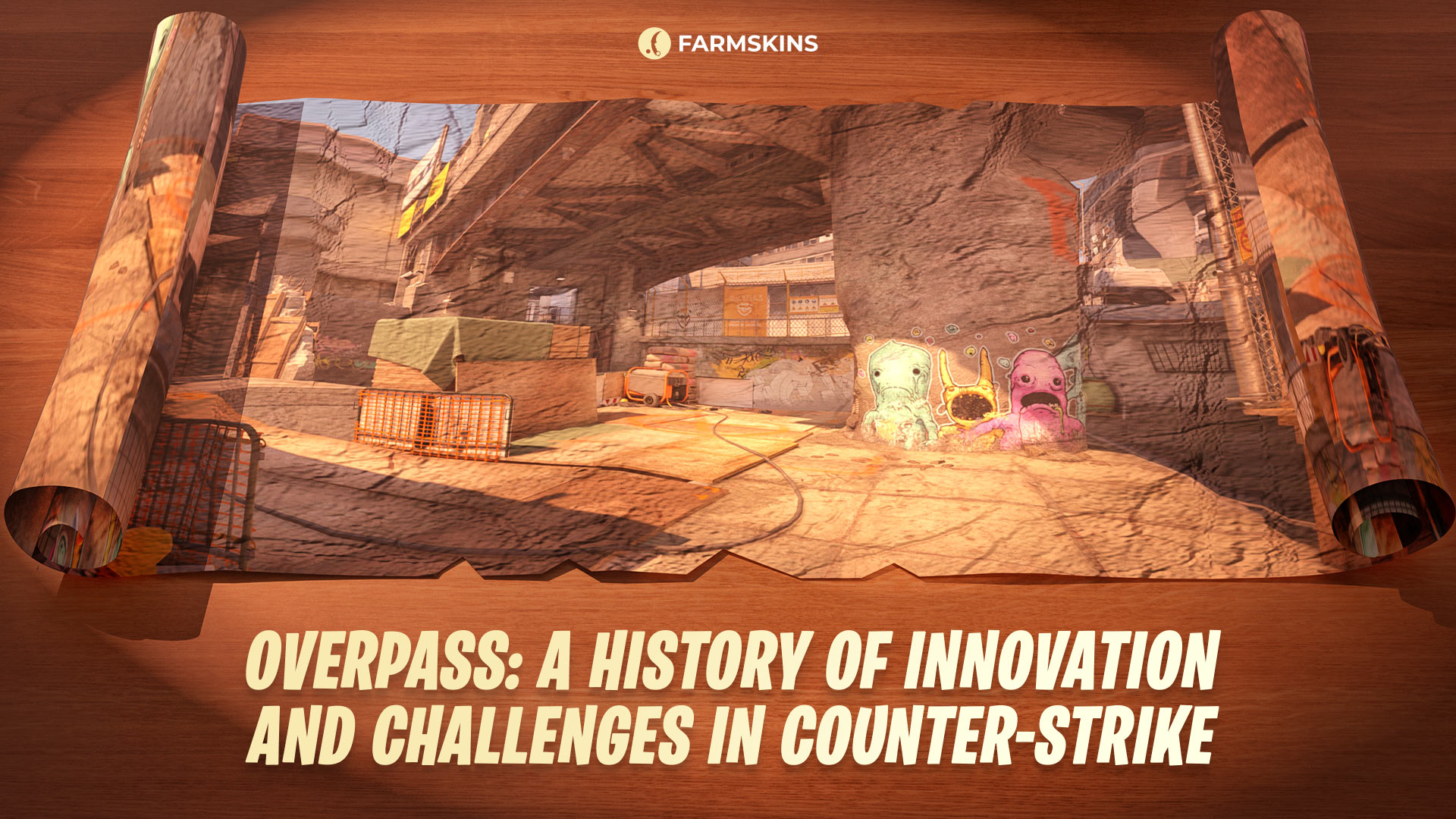
Overpass is one of the most unique CS maps, introduced by Valve in 2013 with a distinct vertical layout, open spaces, and complex sightlines. Its design, both praised and debated, has led to significant updates over the years to enhance gameplay balance and flow. This article explores the evolution, defining features, and lasting impact of Overpass within the Counter-Strike series.
Origins of Overpass, Key Features of Overpass, Major Changes Over Time, Overpass as an Experimental Map, Overpass in the CS2 Era
Origins of Overpass
Overpass in CS was introduced in December 2013, launched alongside Cobblestone as part of a Valve map update. Unlike other maps that adapted existing designs, Overpass was built from scratch by Valve, marking the company’s first entirely original addition to Counter-Strike’s map pool since Mirage.
At release, Overpass faced criticism for its unusual layout. The map’s large size and verticality were unique but posed significant challenges for players. With the A site positioned on elevated terrain and the B site on a lower level, movement and line-of-sight options were more complex than typical maps. Lacking the familiar connectors, Overpass forced players to commit to their chosen routes, limiting flexibility in gameplay. This rigid structure and an open B site created vulnerabilities, making it difficult for players to execute strategies effectively. Valve’s intent to innovate was clear, but the design proved more challenging to master than anticipated.
CT Positioning in CS2: Macro and Micro Concepts
Key Features of Overpass
Overpass stands out for its large size and vertical design, with the A site elevated above the B site, linked by staircases and narrow paths. This multi-level layout adds strategic depth, giving players opportunities to exploit height advantages and sightlines. The map’s intricate network of connectors and chokepoints, including areas like bathrooms and construction, provides various strategic routes but requires precise coordination to control.
Known as a “commitment CS map,” Overpass’s structure often locks players into their chosen routes, making it crucial to plan movements carefully. With open spaces and challenging access points, Overpass rewards calculated aggression and adds a unique rhythm to gameplay.
Major Changes Over Time
Overpass has seen significant updates since its release to improve flow and balance. Early versions restricted movement, with few connectors and tight pathways that forced players into predictable routes. Valve addressed these limitations by adding more pathways, improving access, and refining cover on both bomb sites. The open B site gained additional cover, while the A site saw streamlined entry points to support varied approaches.
A key moment in Overpass’s history was the “Olaf Boost,” a notorious exploit used in a pro match, which prompted Valve to patch out problematic angles and visibility issues. Today, Overpass’s evolved layout offers improved connectivity, strategic depth, and balanced gameplay, making it a staple in competitive play.
Overpass as an Experimental Map
Overpass and Vertigo both exemplify Counter-Strike’s experimental approach, breaking from traditional layouts with unique vertical designs. Overpass’s structure emphasizes map control and strategic movement through elevated paths and open sightlines, while Vertigo’s extreme verticality and multi-level engagement create high-risk, high-reward scenarios.
Although both maps in CS face balance challenges, Overpass has remained more stable in the competitive pool, while Vertigo’s layout has sparked more divisive opinions. Vertigo quickly reached a “balance ceiling” that’s difficult to adjust without major redesign, whereas Overpass strikes a better balance, blending experimental elements with playability. This makes Overpass a standout example of innovative design that remains beloved despite its quirks, offering a unique challenge without alienating players.
Top 5 best Community maps in CS2
Overpass in the CS2 Era
In CS2, Overpass received a striking visual overhaul, updating textures, lighting, and details to enhance immersion while leaving the core layout unchanged. This approach preserved the map’s defining features, like its large size, verticality, and intricate connectors, which continue to favor a defensive, CT-sided playstyle.
Despite new visuals, Overpass’s layout still benefits defenders with its long sightlines and CS map control emphasis, as recent statistics highlight its CT dominance. This update has renewed interest in Overpass, inviting players to appreciate its distinctive style and strategies in a modernized setting. While some players still hope for structural tweaks to address balance, the visual improvements have given Overpass fresh life in the CS2 era, solidifying its place as a classic, complex map.


