The Outer Worlds 2 Review – Obsidian’s RPG Returns

The Outer Worlds 2 — The Classic RPG Returns
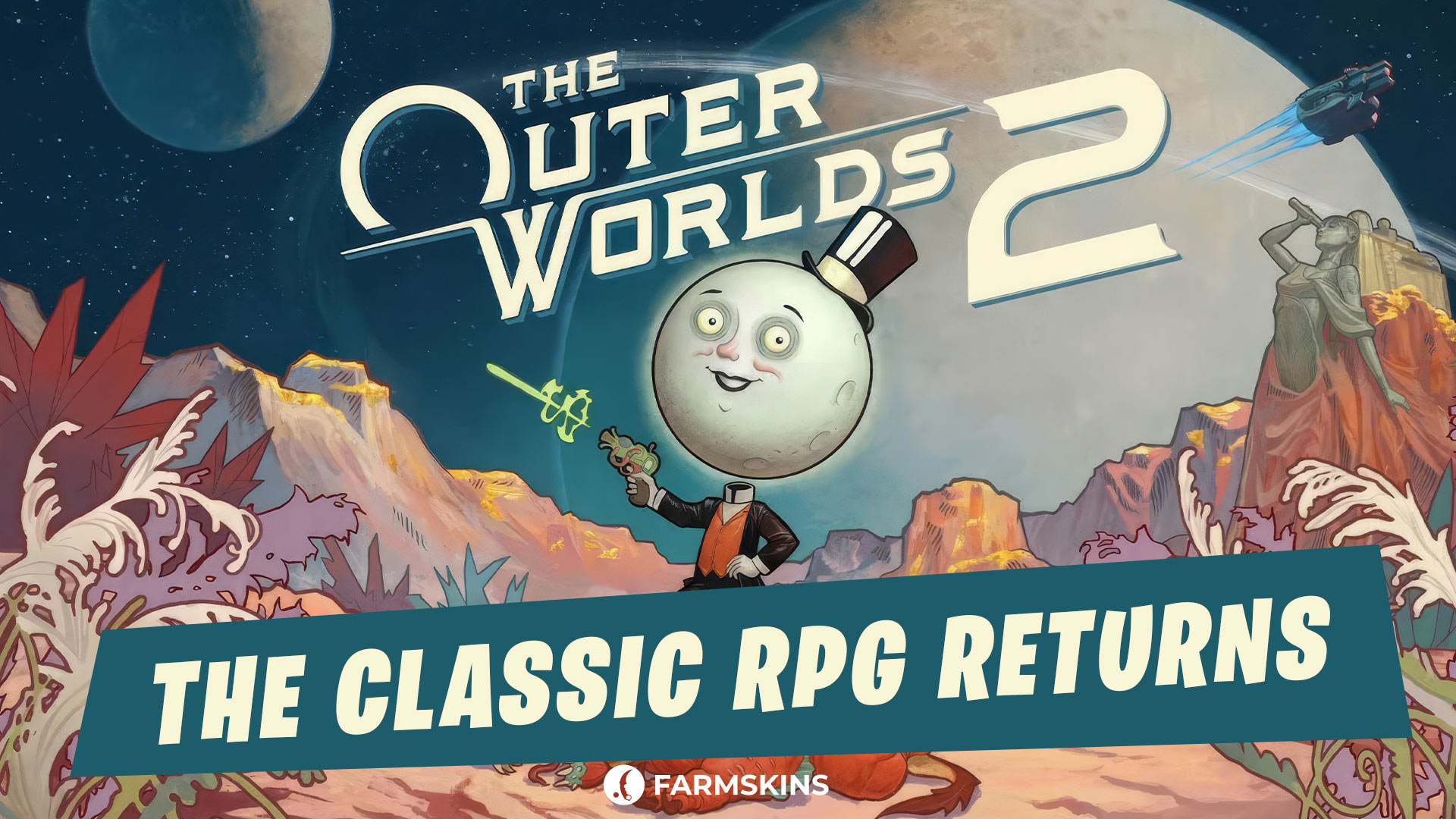
Outer Worlds 2 is Obsidian's new space RPG and came out on October 29, 2025. Sequel reaffirms that the devs have not lost their magic, and are still able to create deep, humorous, choice-driven RPGs where every choice counts. If the first one was warming up, then the second is a step forward in all possible ways.
Story and World, Gameplay and Progression, Combat System, Visuals and Optimization, Music and Atmosphere, Difficulty and Variability, Verdict
Story and World
The game takes place on the Arcadian colony, where the Earth Directorate operative gets drawn into a sequence of mysterious hyperspace rifts. Set against the background of a war between the totalitarian Protectorate, the tyrant of hyperspace travel, and mega-corporation Auntie's Choice, founded by the consolidation of legendary brands, the player will be required to decide whether to join either side or forge their own path.
As always, Obsidian focuses on social commentary and satire — satirizing success cult, corporate greed, and bureaucracy. The dialogue is full of irony, and every line carries the studio's signature flavor. The main storyline, meanwhile, remains readable and interesting and not burdened with too much philosophy.
Gameplay and Progression
Outer Worlds 2 stays true to old-school RPG traditions, in which skills, dialogue, and player choices matter most. All encounters are approachable in multiple ways — blast the door off, engineer the lock, or beg an NPC to hand over the key. Every stat matters, whether it’s charisma, medicine, or persuasion.
The progression system has been redesigned: there are no more traditional attributes, but instead, there’s a wide variety of perks and flaws. These add both humor and depth — for example, the “Bad Knees” flaw makes your character creak when crouching but move faster overall. Small touches like this give your hero personality and make the world feel alive.
Special attention should be given to Obsidian’s signature humor — one of the main reasons the series is so beloved. The developers didn’t miss the chance to poke fun at players who bought the most expensive version — the game’s premium edition. Such users immediately receive a unique vice called “Consumerism,” which lowers merchant prices by 15% but also decreases the value of sold items by 10%. The description simply reads:
“You are the reason our marketing works.”
Players were delighted by this joke, noting that it perfectly captures the classic Obsidian spirit — light sarcasm directed even at their own audience. Ironically, this “negative bonus” turns out to be genuinely useful: early in the game, it helps save money, and its drawback can be offset by another vice — for example, “Kleptomania,” which doubles the value of stolen goods.
This system of vices has become one of the most amusing and clever mechanics, perfectly reflecting Obsidian’s philosophy — mocking both the player and the world they are trying to save.
Companions and factions are big contributors. There are six companions, each of whom has a backstory, personality, and quest that all add to the game. The factions range widely — from religious orders to revolutionary pioneers — and their questlines are so good that they frequently rival the quality and impact of the main story.
Combat System
Combat has seen major improvements. Shooting has become more dynamic, guns are more varied, and firearms range from standard shotguns to experimental plasma and electricity-powered blasters. Mechanics like double jump and sliding have been added, which provide a lot more mobility and strategic possibilities. There are also some fun gadgets - for example, a shrinker.
Stealth fans will appreciate the extra features: you can now disintegrate bodies to conceal evidence and use special gear to incapacitate enemies. AI has become smarter, and firefights demand precision — at higher difficulty levels, one mistake can be fatal.
Visuals and Optimization
Visually, the game is a step up from the first, if not necessarily one that takes the genre leaps and bounds forward. The world is lush, colorful, and immediately identifiable — with a dash of retro-futurism and starry grime. Lighting and color grading provide a warm, cinematic glow that's atmospheric and easy on the eyes.
Performance is solid across the board: the game runs very well on its stated system requirements, though it may have been possible to further optimize it for low-end PCs. Still, the stability is impressive — major bugs are virtually absent.
Music and Atmosphere
The music is among the greatest surprises. While in the initial game the tunes kept playing in the background, The Outer Worlds 2 has a more emotionally charged, richer score. The theme song is still identifiable but seems more cinematic and glorious, absolutely fitting for the scope of the sequel.
Difficulty and Variability
The game offers several difficulty levels, and even “High” provides a solid challenge. Early encounters can be rough, but by the end, the protagonist turns into a powerhouse — many players will likely wish they’d chosen the hardest mode from the start.
Every decision has consequences: killing an NPC doesn’t break a quest chain but instead alters how the story unfolds. This gives the playthrough a sense of freedom and encourages full role immersion.
The Most Serious Update: Serious Sam 2 Receives a 20th Anniversary Patch
Verdict
The Outer Worlds 2 isn’t perfect, but it’s a truly strong RPG that marks Obsidian’s triumphant return to form. It combines sharp humor, deep dialogue, player freedom, and solid mechanics. The world may not be huge, and the visuals aren’t ultra-realistic — yet this is a game you’ll want to come back to again and again.
It's got all the fans' best things about Obsidian: deep characters, sharp satire, consequential choices, and a living, breathing world. If Fallout: New Vegas had elevated the bar for narrative RPGs before, The Outer Worlds 2 charges into town fearlessly in its footsteps — with a cosmic twist this time.
Players can expect an intergalactic adventure wherein every choice, every word, and every shot counts. It may just be the best thing that RPG players could hope for during late 2025.


