Exploring the Legacy of Inferno in CS2: The Timeless Battleground

Exploring the Legacy of Inferno in CS2: The Timeless Battleground
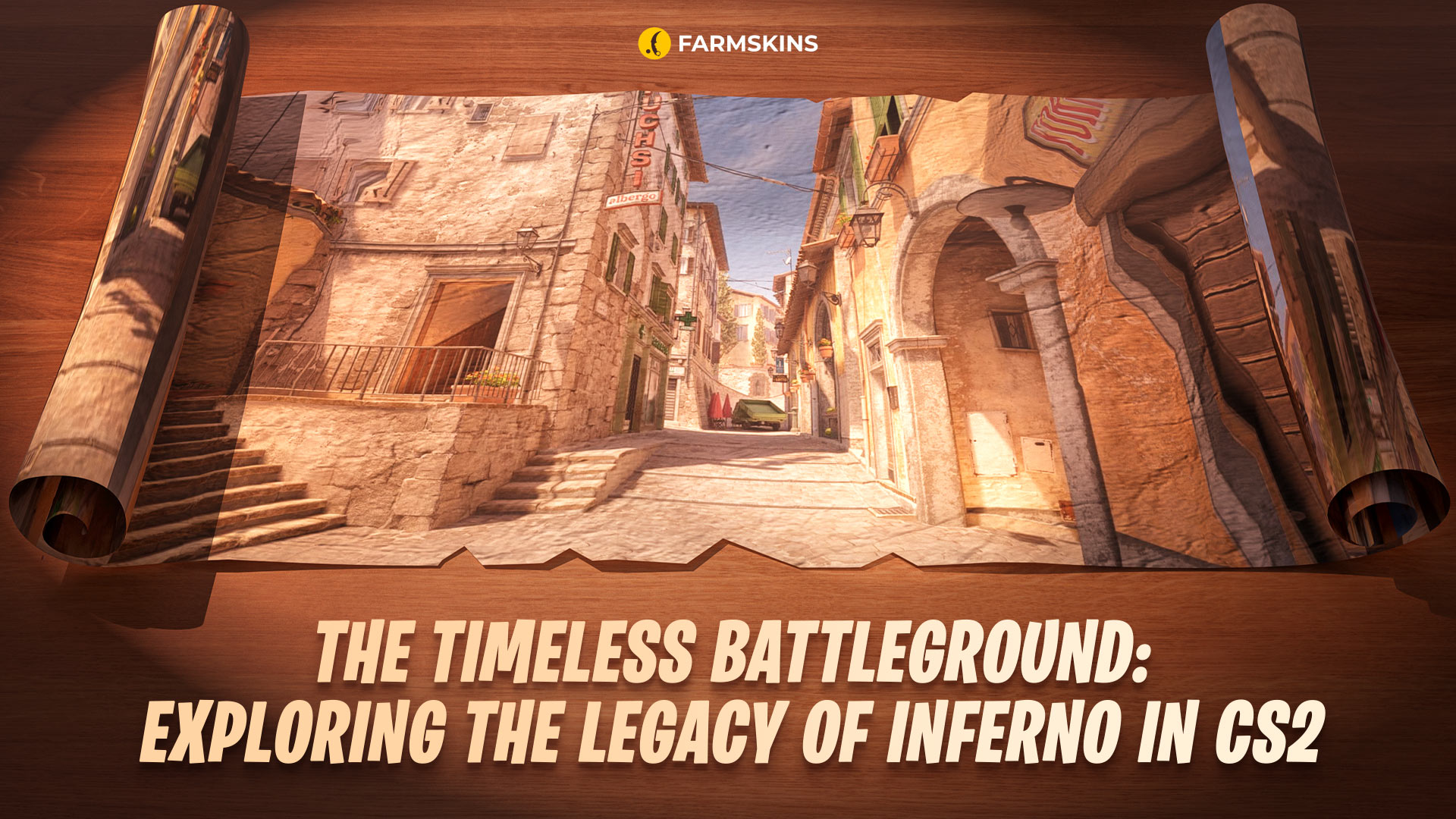
Inferno is a legendary map in CS2, celebrated for its tight, strategic layout and intense bombsite battles. Since 2001, it’s shaped competitive Counter-Strike, hosting unforgettable plays and evolving to stay at the heart of high-stakes tournaments. This iconic battleground remains where the game’s greatest scores are settled.
The Origins of Inferno, Inferno’s Evolution and Influence, Iconic Moments and Legendary Plays, The Strategy of Inferno, Inferno in the Modern CS2 Era
The Origins of Inferno
Inferno map debuted in Counter-Strike 1.1 in 2001, quickly distinguishing itself with its narrow paths, rustic layout, and emphasis on strategic positioning. Created by map designer Christopher “Narby” Auty, Inferno was inspired by real-life European village architecture, giving it a unique, claustrophobic feel compared to other early maps. Unlike the wide-open spaces of Dust II, Inferno’s close-quarters design demanded a slower, more tactical approach.
Initially set in a village with bombsites near gas pipelines, Inferno became a staple in competitive play, where players had to master precise rotations and defensive setups. The map’s structure encouraged tactical depth, making it a favorite for slow, methodical gameplay that rewarded patience and teamwork. From its earliest days, Inferno was more than a map—it was a proving ground for players who valued strategy as much as firepower.
Inferno’s Evolution and Influence
Inferno in CS2 has seen major transformations since its 2001 debut, each rework refining its iconic, close-quarters layout while enhancing its visual appeal. In Counter-Strike: Source (2005), Inferno evolved from a basic village into a detailed European-inspired setting, with elements like the “first and second oranges” that became famous callouts.
In CS:GO (2012), the map received another visual upgrade, emphasizing its gritty, tactical atmosphere. Its tight choke points and strategic layout turned Inferno into a fan-favorite for tournaments, producing unforgettable plays and intense rounds.
The 2016 rework addressed its narrow, repetitive spaces by widening pathways and smoothing chokepoints, adding more balance while preserving its strategic depth. Through its evolution, Inferno has stayed a defining map in Counter-Strike, where skilled teams must rely on tactics, timing, and coordination to prevail.
Iconic Moments and Legendary Plays
Inferno has produced some of Counter-Strike’s most unforgettable plays, often decided by split-second decisions in high-stakes rounds. One legendary moment came in 2015, when KennyS faced a 1v3 against Luminosity. With only a sliver of health, he eliminated each opponent with pinpoint accuracy, clutching the round in an incredible comeback that left audiences stunned.
Another iconic play involved Freiburg in 2014 during Fnatic’s map control on Inferno. Down to just 5 HP, he managed a quad kill, single-handedly retaking bombsite A and solidifying Ninjas in Pyjamas’ position in the match. His aggressive yet calculated plays became legendary for their boldness and precision.
Conditioning in CS2: How to Control and Manipulate Your Opponent’s Playstyle
The Strategy of Inferno
Inferno’s tight layout demands precise coordination and effective utility use. Key areas like Banana and Apartments are critical chokepoints, with Banana often dictating the round’s pace; well-placed smokes or Molotovs can stall pushes or secure control. Bombsite A requires synchronized attacks through multiple entries, while defenders rely on strong positioning in Pit and Balcony to hold the site.
Inferno’s retakes are notoriously difficult due to limited routes and confined spaces, often leading Counter-Terrorists to save rather than attempt risky site recoveries. Success on Inferno hinges on smart rotations, mid-round adaptability, and flawless team play, making it one of the most strategically demanding maps in Counter-Strike.
CT Positioning in CS2: Macro and Micro Concepts
Inferno in the Modern CS2 Era
In CS2, Inferno remains a staple of competitive play, retaining its challenging layout while benefiting from visual and technical upgrades. These updates enhance the CS2 map atmosphere, making its tight corridors and bombsites feel even more immersive. While the core strategy and structure are largely unchanged, improved graphics and lighting add depth to gameplay, enhancing visibility and making precise engagements in areas like Banana and Apartments even more intense.
In CS2’s competitive landscape, Inferno continues to be a test of team coordination and strategic depth. Teams must still master utility usage, execute well-timed rotations, and adapt quickly to their opponents’ moves. With updated mechanics and subtle design tweaks, Inferno remains the ultimate proving ground in CS2, challenging players to bring their best in every round.


